

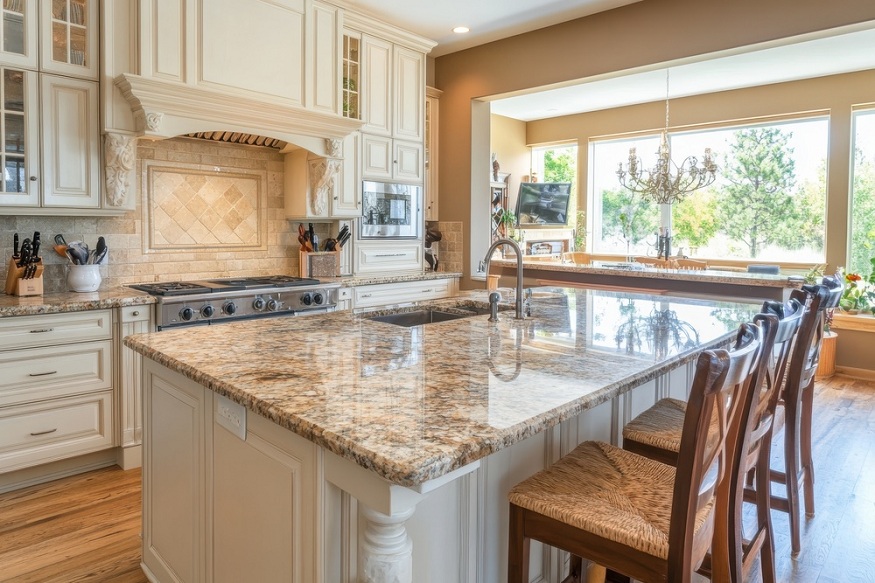
Step into a truly expensive kitchen and you feel it immediately. Something about the space just hits different. Not just the fancy appliances or the stone surfaces, though those help. The real separation between high-end and everything else runs deeper. It’s in a hundred small decisions that add up to something extraordinary.
Materials That Whisper Quality
Cheap kitchens are quickly noticeable. Peeling laminate is visible where the counter meets the sink. The cabinet doors swelled because of water damage. The steam from the dishwasher made the veneer peel. Things break down at the most inconvenient times.
Walk into a premium kitchen, though? Different story. Real wood cabinets that look better as they age. Stone that laughs off hot pans and knife slips. Kitchen countertops carved from thick slabs where you can see the material wrapping around the edges; no fake strips glued on to pretend. Companies like Bedrock Quartz know this game, delivering surfaces thick enough that guests run their hands along the edges just to feel that solid stone continue around the corner. You knock on these counters and hear a dull thud, not a hollow echo.
Same deal with metals. Grab a cheap faucet hard enough and the chrome flakes off, showing white plastic underneath. Premium fixtures? Solid brass or stainless steel all the way through. Scratch them twenty years later and you hit the same material. That’s the difference between something built to impress at first glance versus something built to last through two kids and three dogs.
Scale and Proportion Matter
Size alone doesn’t equal luxury, but the right size does. High-end islands don’t just squeeze into the space. They own it. There’s enough room for two people to work next to each other without bumping into each other. The length should prevent bar stools from overcrowding. The whole thing feels intentional, not like someone jammed the biggest island they could afford into whatever space remained.
Ceilings tell their own stories. Eight feet is fine. Ten feet changes the entire game. Suddenly there’s room for taller cabinets, bigger windows, and statement light fixtures that don’t bonk tall guests on the head. More vertical space makes even small footprints feel grand. But get the proportions wrong and money can’t save you from looking amateur.
Craftsmanship in Every Corner
Factory kitchens show their shortcuts everywhere. Crown molding with visible seams. Filler strips jammed beside appliances. Gaps where the backsplash meets wonky walls. You can spot the rush job from across the room. High-end work looks inevitable, as if it grew there. Installers spend hours scribing trim to match wavy walls perfectly. Dishwashers hide behind panels identical to the cabinets. Paint goes on in multiple coats. It is sanded between each one until the surface feels like silk.
The Cohesive Vision
Here’s what really sets luxury kitchens apart: nothing feels random. The faucet’s finish coordinates with the cabinet hardware. This, in turn, complements the light fixtures. The counter veining picks flecks of color from the backsplash up. Floor patterns relate to the ceiling beams. Somebody thought about how every piece talks to every other piece. This thinking extends past looks into pure function. The prep sink sits exactly where you need it. The refrigerator opens the right direction for traffic flow. Nothing makes you walk extra steps or reach awkward angles.
Conclusion
Premium kitchens eliminate friction you didn’t know existed. Every drawer slides perfectly. Each surface handles real-world abuse. Storage actually fits what you own. Light lands where you work. The space doesn’t just photograph well for magazines; it works harder while feeling effortless. That’s what money really buys in a kitchen: the luxury of never thinking about your kitchen at all.